

The Business Behind Designing Airport Concession Spaces
Where smart strategy meets concessions performance: how small businesses can succeed at DEN

Airports are often viewed as transitional spaces, places travelers pass through quickly on their way somewhere else. Yet within those terminals are carefully designed concessions environments that must serve thousands of people every day. Designing for airport concessions requires more than visual appeal; it requires understanding the intersection of architecture, branding, logistics, and traveler behavior.
Neoera has developed a deep appreciation for the strategic and creative challenges that make airport concessions design a category all its own. The firm’s projects at Denver International Airport (DEN), including Björn’s Colorado Honey, High Land Mercantile, and Bodega DEN, offer an opportunity to explore how design can support both the operational realities of airports and the traveler experience as they move through them.
Concessions Opportunities at DEN are vast
With more than 269,000 square feet of space and over 200 merchants, DEN’s concession program generated $650 million in 2024, equating to $2,417 per square foot and $15.79 per enplaning passenger.* With ongoing concourse expansions and increased passenger travel, these figures continue to increase every year, which means there is big business for local Denver retailers, specialty retailers, food and beverage purveyors, and service providers.
*figures reported on Fly Denver Concessions
The Business Reality Behind Airport Concessions
While design plays a visible role in airport retail, it is only one piece of a much larger and more complex business process. Opening a store in an airport typically begins long before design starts—with the Request for Proposal (RFP) process. Airport concession opportunities are highly competitive, and small businesses often invest significant time and resources preparing proposals that outline their concept, operations, financial plan, and design vision. For many entrepreneurs, this process can feel daunting. The timelines are long, the requirements are detailed, and the financial commitments are significant. Once selected, tenants must navigate additional layers of coordination with airport authorities, concession partners, architects, contractors, and regulatory teams.
At Denver International Airport, CEO Phillip A. Washington has placed a strong emphasis on expanding opportunities for small and diverse businesses within the airport’s retail program. This initiative has opened the door for many local concepts that might not otherwise have access to such a large platform. But even with those opportunities, the airport environment can be challenging for first-time tenants.
That’s where experience becomes valuable. Working with architects and consultants who have already navigated the airport process can help businesses understand:
- How the approval and permitting process works
- How long projects typically take to move from concept to opening
- Construction costs and operational constraints to anticipate
- How to design spaces that perform well in a high-traffic environment
This institutional knowledge helps reduce risk and gives small businesses a clearer roadmap through what can otherwise feel like an overwhelming process.
Why is Design Important?
Designing for Travelers in Motion
Unlike traditional concessions environments, airport concessions are built around movement. Travelers are navigating security checkpoints, boarding times, and unfamiliar environments, often with luggage in tow and limited time to browse. This means the design must communicate clearly and quickly. Storefronts must be legible from a distance, layouts must encourage intuitive circulation, and product displays must enable travelers to understand what a business offers. The challenge lies in creating a space that accommodates both quick transactions and moments of discovery. When done well, design helps reduce friction in the travel experience, making concessions environments feel welcoming even during the busiest travel periods.

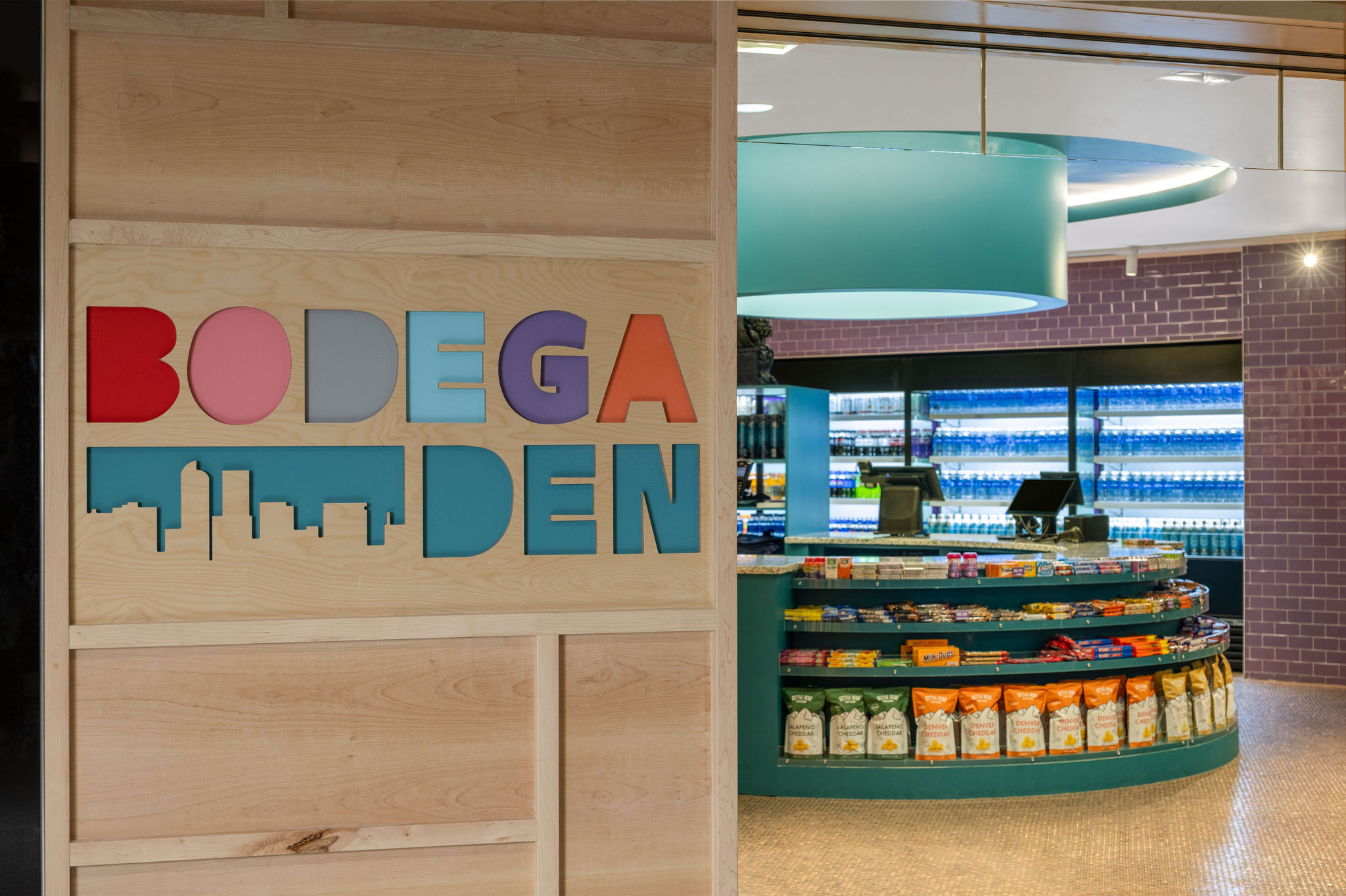
Bodega DEN is a travel convenience store at the center core of Concourse C, and is owned and operated by Proserve Corporation, a woman and minority-owned Denver business.
Translating Brand Identity into an Airport Environment
Airport retail concepts begin with brand identity, but translating that identity into the regulated and high-performance environment of an airport requires thoughtful coordination. At DEN, Neoera worked with the beloved local purveyor Björn’s Colorado Honey to create a space that reflects the brand’s Scandinavian heritage and the natural qualities of its honey products. The specialty retail and coffee bar design incorporates warm wood tones and natural materials, alongside bold yellow accents on the ceiling and walls that evoke the color and warmth of honey. The layout also draws inspiration from the geometry of honeycombs, creating interconnected zones for circulation and display. The result is more than a retail and coffee shop; it’s a calm, sensory environment within Concourse C, where travelers can sample local honey, enjoy honey-infused beverages, and experience a small piece of Colorado culture.
.jpg)
Björn’s Colorado Honey on Concourse C, west sub-core, is an owner-operated specialty retail and cafe concessions space.
How to Make a Small Business Succeed at the Airport
Airport concessions present unique opportunities to access millions of travelers each year and the chance to introduce a brand to an international audience. But success in that environment requires preparation.
Small businesses considering airport concessions typically need to think carefully about several factors:
Operational readiness
Airport concessions operate long hours, often from early morning to late evening. Businesses must be prepared for staffing, supply chain coordination, and consistent product availability.
Financial planning
Airport build-outs are complex and costly. Strong financial planning, and often a partnership with concession operators, helps ensure businesses can manage construction and operating costs.
Brand clarity
The most successful airport concepts communicate their identity quickly. Travelers often make purchasing decisions in seconds, so the brand story needs to be clear and visually compelling.
Adaptability
Airports operate under strict guidelines related to security, materials, and infrastructure. Flexibility and collaboration are essential to navigating these requirements successfully.
With the right preparation and the right team, however, airport concessions can become an incredible growth platform for emerging brands and a consistent source of revenue for brands that are already beloved and recognizable.
Call us at 720.854.0320 or email at emily.adams@neoerainc.com if you’re interested in learning more about RFP response development and/or concessions brand development and concept design.


